
Written by Annabel
Edited on
2 November 2023
·
16:40
What suitcase material do you need?
At the airport it is not always neatly handled with your luggage. This can damage your suitcase or even your belongings. It is therefore important to pay attention to the material when buying a new suitcase. In this article I explain the different materials of hard-scale suitcases so that you make a good choice when purchasing them.
In short
| Material | Pros | Disadvantages | Usage |
|---|---|---|---|
| Curv | Lightweight, scratch resistant, resistant to extreme temperatures | Pricey | Often |
| Polycarbonate | Lightweight, resistant to extreme temperatures, flexible and pliable | Pricey | Regularly |
| Polypropylene | Extremely strong, cheaper | Heavier weight than other materials | Occasionally |
| ABS | Scratch resistant, flexible and pliable | Less strong than other materials | Occasionally |

Curv
A suitcase made from Curv material is one of the very best materials. A good choice so when you regularly fly and looking for a suitcase that lasts a long time. Curv material was formerly used for making bulletproof vests. It consists of woven layers of polypropylene. This makes the case very sturdy and scratch resistant. The material is lightweight, which means you take more kilos of luggage. This material also retains its shape, even at +125 degrees to -100 degrees. This is important when flying, because in the flight space the suitcase can deform due to extreme temperatures if you fly at high altitudes.
- ** For the frequent traveler who likes comfort **
- Lightweight
- Scratch resistant
- Resistant to extreme temperatures
- Pricey
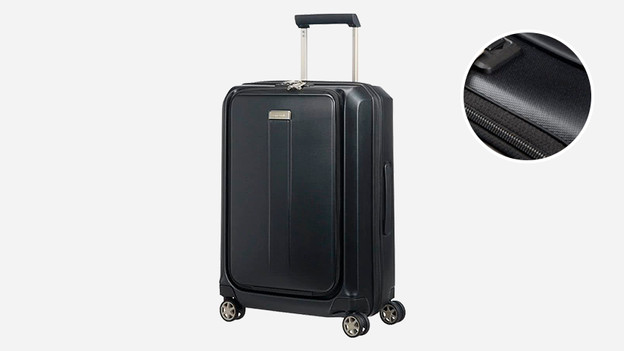
Polycarbonate
A polycarbonate case also has many advantages, just like Curv. The unique thing about polycarbonate is that it is flexible in addition to being very strong and lightweight. Handy while packing, the material will dent. It is unfortunately somewhat more scratch-sensitive than a case of ABS, but that material is less firm.
- ** For the frequent traveler who loves comfort **
- Lightweight
- Resistant to extreme temperatures
- Flexible and flexible
- Pricey
- More scratch-sensitive than a ABS case

Polypropylene
Polypropylene is one of the strongest materials and is therefore also used in making Curv. The hard shell can withstand a strong impact. It is a good alternative for travelers who find the bags made of polycarbonate or Curv too expensive. The disadvantage of polypropylene is that it is often heavier than other materials in this list.
- ** For the frequent traveler with a budget **
- Extremely strong
- Cheaper than the above materials
- Heavier weight than other materials

ABS
ABS is the most scratch-resistant suitcase material there is. The material ensures that the suitcase is highly resistant to scratches. An ABS suitcase also regains its shape more quickly after a dent. Most ABS suitcases are lightweight, which gives you more weight for luggage. An ABS suitcase isn't the strongest or the most lightweight. But this material is generally more affordable than Curv or polycarbonate.
- For the normal traveler on a budget
- Scratch-resistant
- Flexible and bendable
- Not as strong as the materials above

Prefer a soft-scale suitcase?
I don't recommend soft shell suitcases for flights, because soft shell suitcases generally provide limited protection with intensive use (by airline personnel, for example). But if you frequently go on road trips, a soft shell suitcase fits better in the trunk. Other advantages of soft shell suitcases are that they often have a lower weight. In addition, you can store them compactly in smaller spaces. And only soft shell suitcases have front pockets, so you have important documents within reach.
Article by Annabel
Suitcase Expert.
