
Written by Manon
Edited on
12 April 2023
·
10:57
Advice on wide-angle lenses
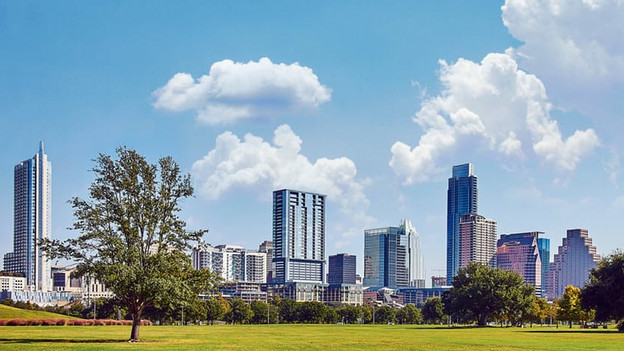
With a wide-angle lens, you'll photograph cities, nature, and interior. As the name implies, this is a lens with a wide viewing angle. The focal length is between 10mm and 35mm, which gives these lenses a wide viewing angle, so a lot will fit in the frame. A wide-angle lens might distort your subject: for example, straight lines may look bent. This is easily corrected in post-processing.
What do you photograph with it?
With a wide-angle lens, you'll photograph cities, nature, and interior. As the name implies, this is a lens with a wide viewing angle. The focal length is between 10mm and 35mm, which gives these lenses a wide viewing angle, so a lot will fit in the frame. A wide-angle lens might distort your subject: for example, straight lines may look bent. This is easily corrected in post-processing.
The crop factor
An objective must be compatible with the sensor in your camera. An APS-C sensor is smaller than a full frame sensor and therefore captures a smaller image than a full frame camera. Part of the environment is 'cropped'. This means that a 28mm lens on a camera with APS-C sensor corresponds to a 42mm lens on a full frame camera. This lens is ultimately less wide-angle than you might think at first. It is useful to take this into account when you search for an objective.
Distortion of your image
A wide-angle lens can distort your image. High buildings or straight lines can be drawn and look unrealistic if you photograph them with a too large picture frame. Therefore, it is not advisable to record a group of people with a wide-angle lens. Legs will look unrealistically long. Fortunately, you get rid of this distortion by editing photos on the computer.

Article by Manon
Camera Expert.
