
Written by Manon
Edited on
27 January 2025
·
13:10
Compare the Nikon Z6III to the Z6II
At first glance, the Nikon Z6II and Z6III look alike. Both cameras are suitable for professional use, but the Z6III performs better in terms of speed. The Z6III has a semi-stacked sensor, autofocus with 3D tracking, and a turnable screen. In this article, we'll list the differences and similarities for you.
View the Nikon Z6III and Nikon Z6II
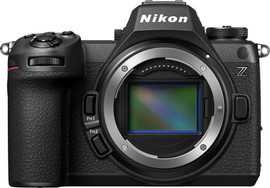
- Nikon Z6III
Thanks to the semi-stacked full-frame sensor full-frame sensor, you'll hardly be bothered by a rolling shutter.
The improved viewfinder is extra sharp thanks to the 6-megapixel resolution.
You record in 4K resolution at 120 fps or record in 6K resolution at 60 fps.
The second memory card slot only fits a CFexpress or XQD card.
2.579,-From
2.149,-
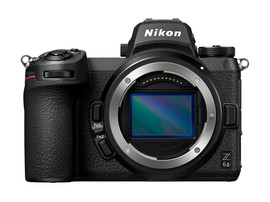
- Nikon Z6II
With the 24.5-megapixel full-frame sensor, you can take detailed photos.
You can record in 4K at 60 fps or Full HD at 120 fps.
The camera has 271 AF points, so you can focus accurately.
The screen isn't 180-degree turnable or tiltable.
The second memory card slot only fits a CFexpress or XQD card.
1.779,-From
1.699,-
Comparison Nikon Z6III and Z6II
| Nikon Z6III | Nikon Z6II | |
|---|---|---|
| Image sensor | Semi-stacked full-frame sensor | Full-frame sensor |
| Megapixels | 24.5 | 24.5 |
| Maximum video resolution | 6K, 60 fps | 4K, 30 fps |
| Brightness viewfinder | 4000 nits | 3000 nits |
| Screen | Turns and tilts | Tiltable |
| Subject recognition autofocus | People, animals, vehicles, and airplanes | People, dogs, and cats |
| 3D tracking | Yes | No |
| Maximum photo speed | 120 photos per second | 14 photos per second |
| Image stabilization | 8 stops | 5 stops |
Image quality
Nikon Z6III: semi-stacked full-frame sensor
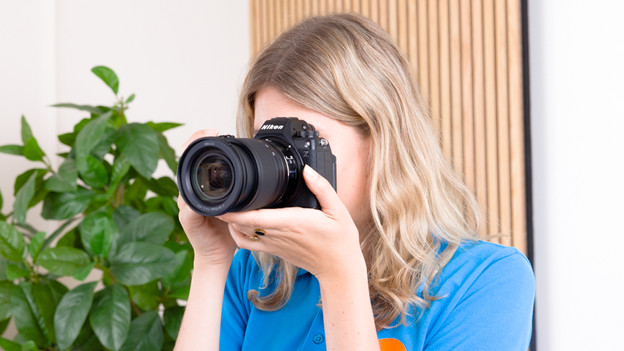
Thanks to the semi-stacked sensor of the Nikon Z6III, you can edit images very quickly. You take 120 JPG photos per second in 10 megapixels or 60 photos of 24.5 megapixels. You're less bothered by a rolling shutter. Because the camera processes the image at the top of the sensor earlier than at the bottom, some lines might not be straight. Thanks to the fast image processing, the chance of this distortion is smaller. Your photos and videos are detailed thanks to the 24.5-megapixel sensor. You can crop your images without quality loss.
Nikon Z6II: full-frame sensor
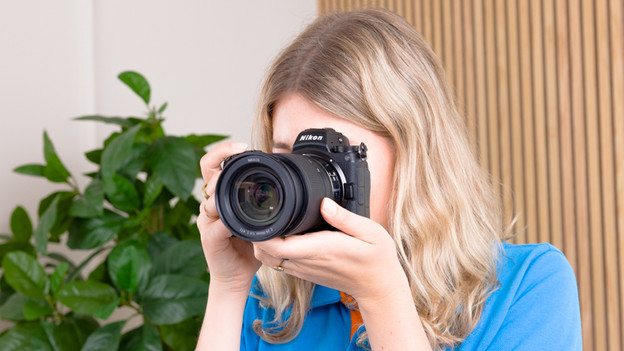
You can make detailed photos and videos with the 24.5-megapixel full-frame sensor of the Z6II. Because this sensor isn't stacked, the image processing is a bit slower than that of the Z6III. You can take photos with this camera at up to 14 photos per second. This is slower compared to the Z6III, but you can also make sharp recordings of fast actions and athletes. The number of megapixels is the same as the Z6III. You can crop photos and videos without loss of image quality this way.
Autofocus
Nikon Z6III: subject recognition with 3D tracking
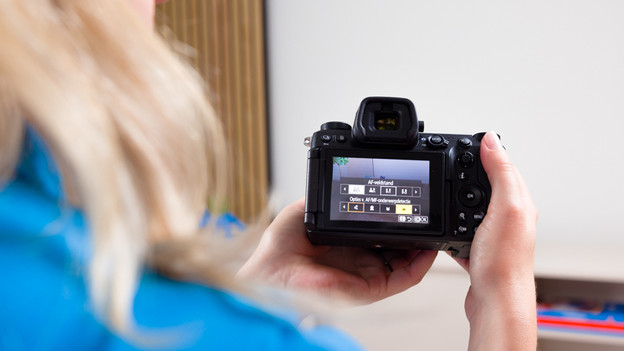
The autofocus of the Z6III has subject recognition with 3D tracking. This way, you can follow moving subject even more accurately. For example, if you take a photo of an animal from the side, the camera will still recognize the animal. If an athlete is coming right at you, the camera with move the focus point from the back to the front. This way, you can easily take sharp action photos. The subjects the camera recognizes are people, cats, dogs, birds, bikes, motorcycles, cars, airplanes, and trains.
Nikon Z6II: subject recognition
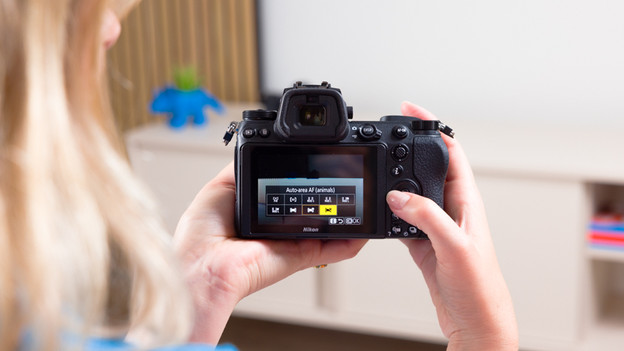
If you take photos with the Nikon Z6II, you can use autofocus with subject recognition. This camera recognizes fewer specific subjects. The camera doesn't recognize various vehicles, like airplanes and trains. It does recognize people, dogs, and cats. It automatically focuses on the eyes or the face. You can easily take sharp portrait photos or photograph animals during a safari this way. The autofocus is very fast, so the chance you miss an activity moment is very small.
Design
Nikon Z6III: turnable and tiltable screen
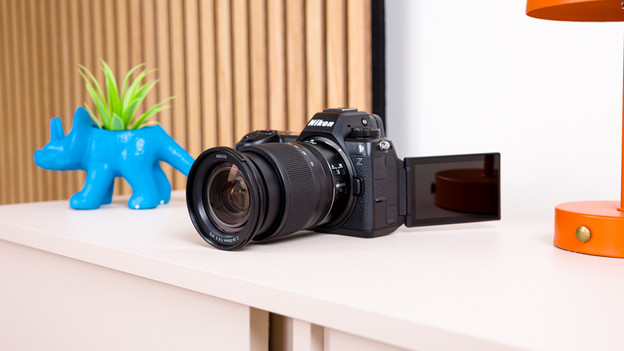
The turnable and tiltable screen of the Z6III is improved in comparison to the previous model. You can easily take photos from difficult angles this way. When you record vlogs, you can turn the screen fully towards you. That way, you can decide on the frame of your video. The viewfinder of the Z6III has a 6-megapixel resolution and 4000-nit brightness. You'll see a bright image with lots of contrast this way. Thanks to the high refresh rate of the viewfinder, images are smooth.
Nikon Z6II; tiltable screen only
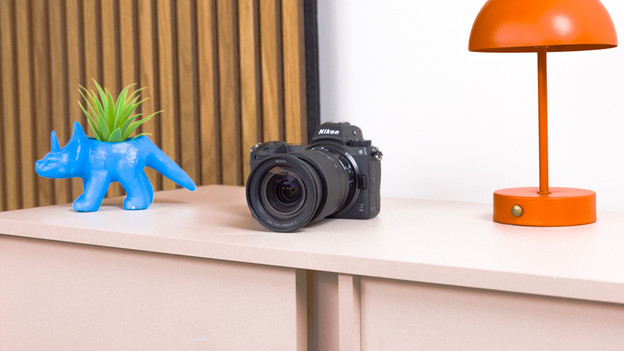
The screen of the Nikon Z6II is only tiltable. You can partly fold out the screen. This means it's less easy to use the camera for vlogging. You can place an external screen on the camera to see yourself, for example. The viewfinder has a 3-megapixel resolution and 3000-nit brightness. This makes the viewfinder a bit less bright and the contrast isn't as big as on the Z6III. This camera is lighter than the Z6III.
Conclusion
The Nikon Z6III and Z6II are both very fast, so you can use them for sports and action photography, for example. Thanks to the semi-stacked sensor of the Z6III, this model clearly is faster. The autofocus is more extensive than that of the Z6II. It recognizes more subjects, like vehicles. Do you want a camera for on vacation? The Z6II is the better choice. This camera is lighter, so you can easily take it with you all day. The disadvantage is that it doesn't have a screen you can rotate for selfies or vlogs. You can just tilt the screen.
Article by Manon
Camera Expert.
