
Written by Manon
Edited on
6 August 2026
·
12:17
What are the European laws and regulations for drones?
Within the European Union, there are general rules for drones. These rules are the same in all countries of the European Union. Every drone has a Cx label, for example. This determines in which category your drone flies and which drone license you need. In this article, we'll explain what the European legislation is and what you should keep in mind.
Everything on European drone legislation
Do you need a drone license? Do you need to register your drone? And where can you fly with your drone? You'll find the answers to your questions about the European drone rules here.
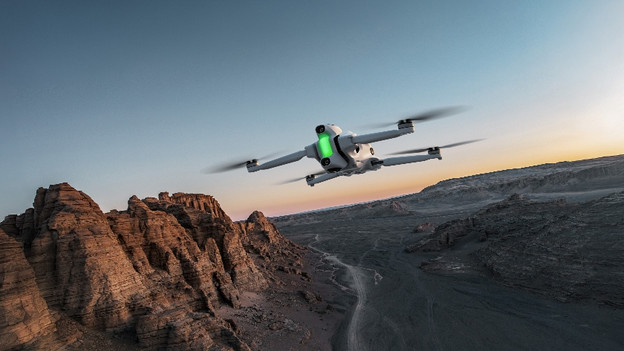
General drone rules (EU, open category)
- Rule 1. Don't fly higher than 120m above the ground (AGL = Above Ground Level).
- Rule 2. Never fly at night.
- Rule 3. Always keep your drone in your visual line of sight during flying (VLOS).
- Rule 4. Keep privacy in mind and don't record others without permission.
- Rule 5. Give priority to air traffic and stay away from emergency services.
- Rule 6. Do you live in the Netherlands and are you younger than 16? Only fly with supervision of an adult with the right flight certificate. In Belgium, a minimum age of 14 years applies to flying with a drone.
- Rule 7. Don't let anything drop out of your drone.
- Rule 8. Don't transport harmful substances with your drone.
- Note: Other rules apply for drones in the specific category.
Which rules apply to your drone?

What does European legislation mean?
European legislation divides drone activities into 3 categories: open, specific, and certified. All drones up to 25kg are in the open category. These are all drones you can buy at Coolblue. If your drone weighs less than 250g, you don't need a course. For drones that weigh more than 250g, you do have to follow a course.

The open category
The open category is divided into 3 subcategories: A1, A2, and A3. Drones with a C0 or C1 label belong in the A1 subcategory. This means you need to keep a 50m distance from people and roads. Drones with a C2 label belong in the A2 subcategory. You also need to keep a 50m distance in this category. If your drone has a C3 label or no Cx label at all, it belongs in the A3 subcategory. In this category, you need to keep 150m distance.
Note: for drones that fall into the A1 category, you only need a course if it weighs 250g or more.
Read more about the drone license here: https://www.coolblue.nl/en/advice/what-is-the-drone-license-and-how-can-you-request-it.html

Cx labels and Remote ID
Since 1 January 2024, all new drones have a Cx label, from C0 to C4. Some older drones already have a Cx label. The Cx label determines in which open category your drone flies and which rules apply to your flight. Do you have an older drone without a Cx label? Your drone automatically belongs to the A3 open category, which means you have to keep more distance. Drones with Cx label C1, C2, and C3 have to be recognizable from a distance. This also applies to drones in the specific category. You have to request a Remote ID for this, which is the digital license plate of your drone.
Read more about the Cx label here: https://www.coolblue.nl/en/advice/what-is-the-cx-label-for-drones.html
Rules for drones in the open category
| Subcategory | Maximum weight drone | Cx label | Minimum distance to people and buildings | Drone course | Operator registration number | Remote ID | DJI drone product series |
|---|---|---|---|---|---|---|---|
| A1 (or A3) | Less than 250g | C0 | Don't fly over a large group of people and keep a safe distance. | None | Yes | No | Lito, Lito X1, Neo, Mini, Flip |
| A1 (or A3) | Less than 900g | C1 | Don't fly over a large group of people. Fly over people as little as possible. | Yes, A1/A3 | Yes | Yes | Air, Avata |
| A2 (or A3) | Less than 4kg | C2 | Keep at least 150m distance to people and buildings. Keep at least 30m distance to people and at least 5m horizontally in low speed mode. | Yes, A2 | Yes | Yes | Mavic |
| A3 | Less than 25kg | C3 | Don't fly over people. Keep a 150m minimum distance to living areas, commerce areas, industry areas, and recreation areas. | Yes, A2 | Yes | Yes | |
| A3 | Less than 25kg | C4 | Don't fly over people. Fly at a safe distance from people, animals, and other aircraft. Keep a 150m minimum distance to living areas, commerce areas, industry areas, and recreation areas. | Yes, A1/A3 | Yes | No |
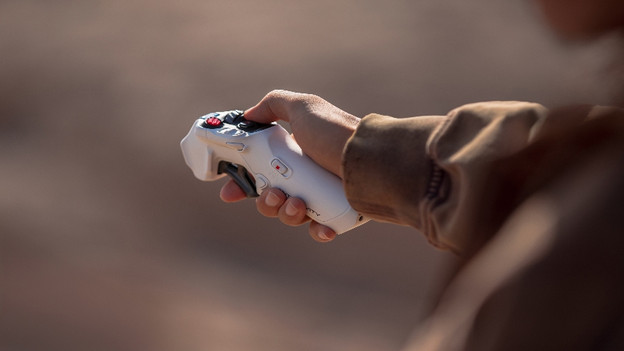
You've bought a drone, what now?
- Step 1. Does the drone have a camera or is it heavier than 250g? You have to register as drone pilot by requesting the operator registration number. In the Netherlands, you can do this at the RDW and in Belgium at the DGLV.
- Step 2. Attach the operator registration number to your drone. This way, it's clear right away who's responsible for it.
- Step 3. Does your drone weigh more than 250g? Request the European drone license. Which drone course you take and which certificate you need depends on the weight of your drone.
- Step 4. Insure your drone. This way, you can cover damage and your drone lasts longer.
- Step 5. Always check before your flight where the no-fly zones are. This way, you can prevent fines.
Note
The flight rules for drones change regularly. Every year, important updates are added. For example, the arrival of Cx labels and remote IDs in 2024. That's because the technology of drones keeps changing and the rules are adjusted to that. That's why you should always check before your flight which rules apply to you.
Article by Manon
Drone Expert.
