Written by Caitlin
Edited on
10 September 2026
·
10:31
What are the cleaning systems of an oven?
Thanks to the different cleaning systems of an oven, you spend less time cleaning. For example, pyrolysis burns all grease residue and hydrolysis loosens it. With catalysis, the walls absorb the dirt. Read which systems are available and how they work here.
Reinigingssystemen van een oven
| How it works | Manual cleaning | |
|---|---|---|
| Pyrolysis | Burns dirt | None |
| Hydrolysis | Loosens dirt | Little |
| Catalysis | Absorbs dirt | Average |
Pyrolysis: burns dirt and grease
Pyrolysis is a cleaning system that burns dirt and grease by heating the interior space to a high temperature. When you press the pyrolysis button, the door of your oven locks automatically. This makes it very safe, because the oven heats up to 500°C. If you have a self-cleaning oven with pyrolysis, you no longer have to scrub grease stains from the interior walls. That saves you another cleaning job.


Hydrolysis: loosens dirt with steam
With hydrolysis, the oven loosens all grease and dirt rests with steam. It's important that you use this function every month, so the rests don't cake on too much. The steam won't be able to loosen it otherwise. With a steam oven, the appliance usually uses water from the reservoir for this. With other ovens with hydrolysis, you put a layer of water on the bottom yourself. This water evaporates thanks to a special program.
Catalysis: walls absorb grease
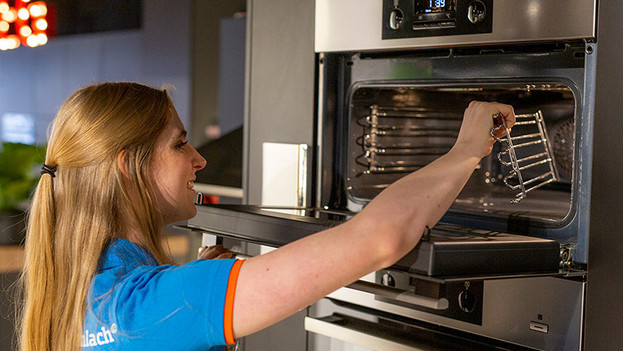
An oven with a catalytic wall absorbs dirt and grease, so you have to clean the bottom and the door yourself. The oven then burns it at a temperature of 200°C or more. If you buy an oven that only has a catalytic back wall, you also have to clean the side walls with soapy water.
Article by Caitlin
Oven Expert.