
Written by Laurence
Edited on
15 September 2026
·
11:15
Everything on Samsung TVs
Samsung divided their assortment of televisions into QLED, QLED 8K, and UHD-FHD devices. Below, we'll explain what the differences between these devices are.

QLED
The most recent Samsung QLED TVs are the highest segment from Samsung. All QLED TVs have an improved Quantum Dot display: a screen with an extra later of nano crystals. This allows them to reach a 100% color volume. This provides an extra realistic image display. In addition to the large color gamut, the QLED models also provide a higher brightness. Even in a brightly lit room, because they have a maximum brightness of 1500 to 2000cd/m2. With the SUHD TVs, this is up to 1000cd/m2.
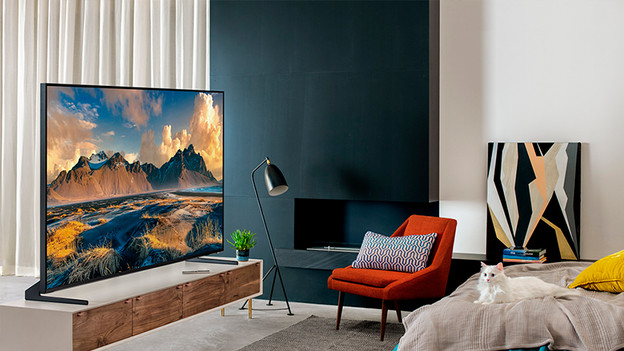
QLED 8K
For the sharpest image quality, choose a QLED 8K television. The 8K resolution is 4 times sharper than 4K and 16 times sharper than Full HD. There aren't many 8K videos available yet, but AI Upscaling provides a smart solution for this. This function increases the image quality of images automatically. That way, the details of your movies, series, or vacation videos are extra sharp.

Premium UHD
Thanks to the Dynamic Crystal Color technology, the images have dynamic and crystal clear colors. This provides vibrant images. The Premium UHD models have a maximum brightness of up to 1000cd/m2. The dark parts of the image will be created by a combination of Local Dimming and a special layer on the screen that reduces reflections. Thanks to the accurate black levels and the large contrast, you can also see details during dark scenes.

UHD
Thanks to the Active Crystal Color technology, the UHD models have 20% more color gamut than the Full HD predecessors. That way, colors are displayed even more realistically. The local dimming technology ensures optimal black levels, colors, light intensity, and sharpness. That way, you get extra sharp images. Samsung KS (UHD) models have a Quantum Dot panel, just like the QLED TVs. This means the UHD TVs also have HDR technology and show more details. Want to know more about HDR?

Full HD
A fragment with Full HD quality is 5 times sharper than an image with HD ready resolution. Most models have the Samsung Wide Color Enhancer technology. With this technology, the image has a lot of details and colors. The Full HD TVs all have a smart TV that gives you access to apps and online videos, such as Netflix and YouTube.